Section 01
The Red Planet
Before you pack a single bag, you must understand the world you're traveling to. Mars is not merely hostile — it is hostile in five or six different ways simultaneously.
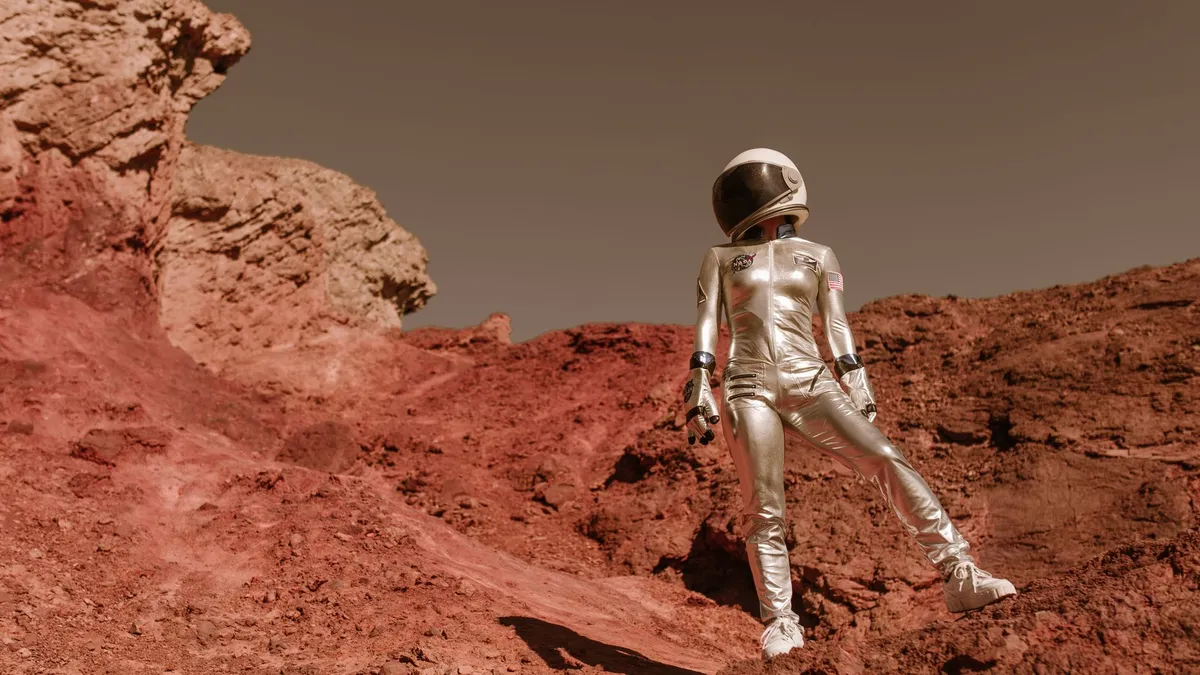
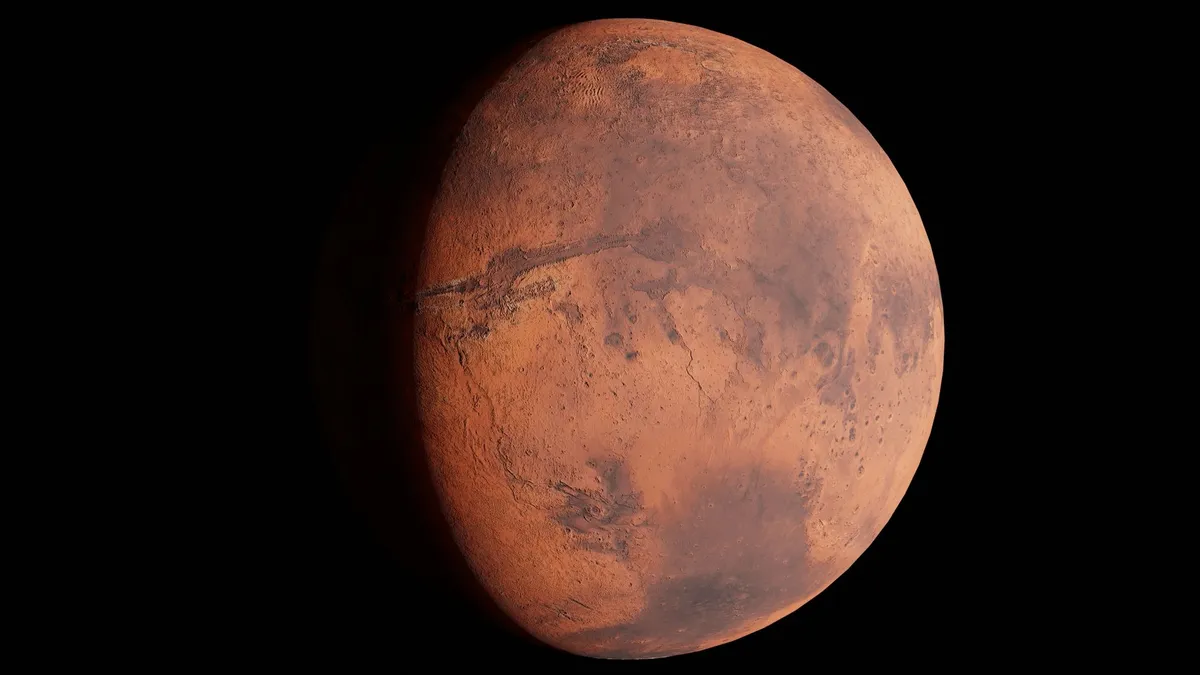
Mars is the fourth planet from the Sun, roughly half the size of Earth, with a surface area approximately equal to all of Earth's dry land combined.[1] It is a cold, desert world covered in iron oxide dust — the rust that gives it its signature red color. It has seasons, polar ice caps, ancient volcanoes larger than any on Earth, and a canyon system — Valles Marineris — that would stretch coast to coast across the continental United States.
It is also, by nearly every measure that matters to life as we know it, deeply inhospitable. The atmosphere is composed of roughly 95% carbon dioxide, with traces of nitrogen, argon, and almost no free oxygen.[2] Atmospheric pressure at the Martian surface averages around 0.6% of Earth's sea-level pressure — less than the air at the top of Mount Everest's stratosphere. Step outside without a suit and the moisture in your lungs would boil before you suffocated.
And yet, it is the most Earth-like world in the solar system. A Martian day (a "sol") lasts 24 hours and 37 minutes. Mars has seasons. It once had liquid water — vast oceans and river channels carved across its ancient surface. It is the only planet humanity has any realistic prospect of colonizing.
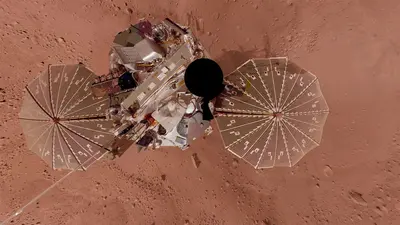
Water ice exists in abundance in the Martian polar regions and beneath the surface at higher latitudes — confirmed by NASA's Phoenix lander and Mars Reconnaissance Orbiter. It cannot exist as stable liquid on the surface due to the thin atmosphere, but as a frozen resource, it is the most critical raw material available to colonists.[4]
The Atmosphere: Friend and Foe
The Martian atmosphere is simultaneously useless for breathing and invaluable as a resource. Its dominant carbon dioxide can be converted — using the Sabatier reaction — into methane fuel and oxygen. Its thin presence provides some aerobraking capability during spacecraft entry. And the traces of nitrogen and argon present a tantalizing possibility: a breathable blend of 40% argon, 40% nitrogen, and 20% oxygen could, theoretically, be synthesized entirely from what the air already contains, supplemented by electrolytic separation of water ice.[5]
The lack of any magnetic field (Mars lost its global magnetosphere roughly 4 billion years ago) means the solar wind continually strips particles from the thin atmosphere. This loss is gradual on human timescales but significant: it is the reason the atmosphere is so thin today, and it is why terraforming Mars — turning it into something more like Earth — would take centuries even with advanced technology.[6]
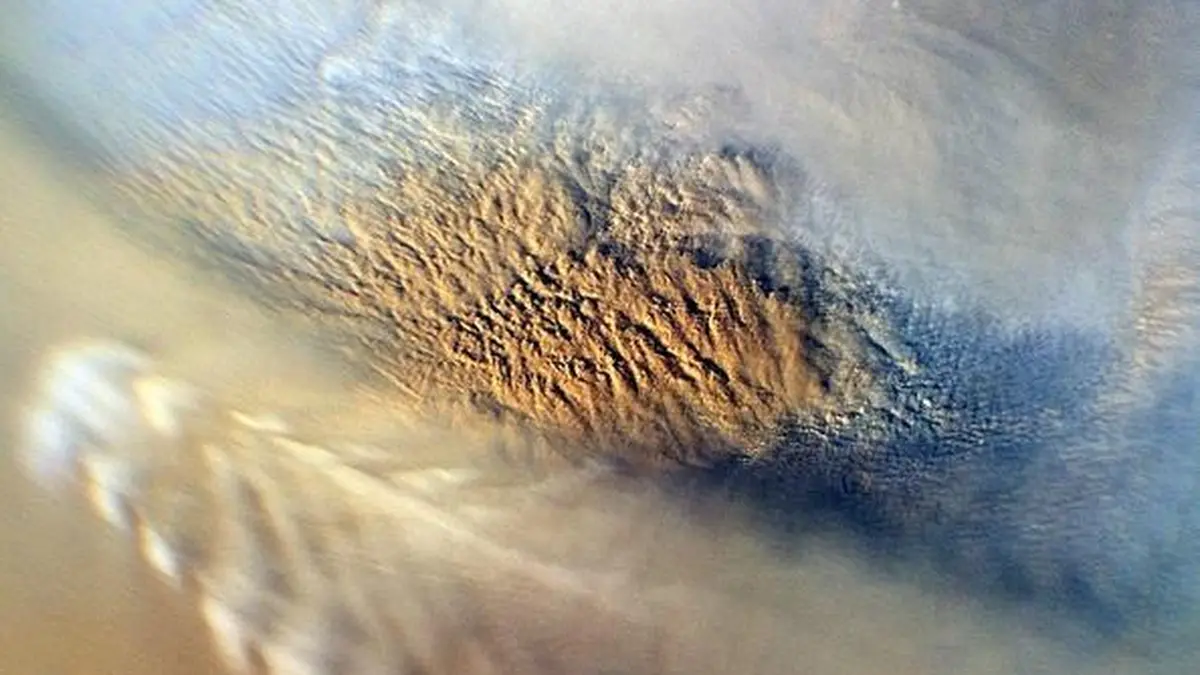
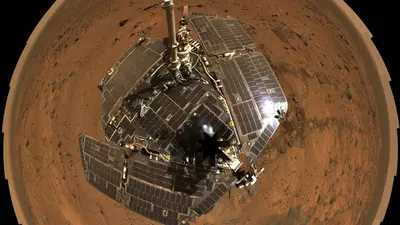
Planet-encircling dust storms occur on Mars roughly every 5.5 Earth years and can last for months, dramatically reducing solar energy generation and abrading equipment.[7] The 2018 global dust storm killed NASA's Opportunity rover by blocking its solar panels. Any long-term colony must plan for weeks or months with dramatically reduced solar power.
Section 02
Humanity's Long Gaze Toward Mars
From ancient Rome naming the red wanderer for their god of war, to Orson Welles panicking a nation, to rovers crawling its ancient surface — Mars has never been far from the human imagination.
A Brief History of Dreaming Red
The ancient Romans named the wandering red star for their god of war — a fitting designation for a world that has inspired equal parts wonder and dread for millennia. The planet's martial redness seemed ominous; its orbital dance against the stars was tracked by Babylonian, Greek, Egyptian, and Chinese astronomers with mathematical precision thousands of years before telescopes existed.
In 1877, Italian astronomer Giovanni Schiaparelli observed what he called canali — channels — on the Martian surface. Poorly translated into English as "canals," the word implied construction. American astronomer Percival Lowell seized on the idea and spent decades at his Arizona observatory convinced he was observing a dying civilization's desperate irrigation works — a planet-spanning hydraulic engineering project by an advanced and doomed Martian race.[8] The canals did not exist, but Lowell's romantic vision lit a fire that science fiction is still burning today.
The Space Race and Mars
Section 03
The Journey
Getting to Mars is not a flight. It is a months-long voyage through deep space, more akin to a 19th century ocean crossing than to any air travel we know — except the sea trying to kill you is invisible, and made of radiation.
The Transit Window
Earth and Mars only align for efficient travel every 26 months — these are called Hohmann transfer windows. Miss one and you wait over two years for the next opportunity. NASA's reference missions plan for approximately 180 days of transit to Mars, a surface stay of 500+ days (waiting for the return window), and another 180 days home — a total mission duration of roughly 860 days.[10]
Faster trajectories exist — nuclear thermal propulsion could potentially cut transit time to 90 days or less — but they require more fuel and more advanced propulsion than conventional chemical rockets. In a mature Mars infrastructure, some missions may use faster routes; regular colonist transport might prioritize fuel efficiency over speed.
Radiation: The Silent Threat
This is not a problem you see coming, and it is arguably the most serious medical challenge of the entire enterprise. Earth's magnetic field and thick atmosphere shield its inhabitants from most cosmic radiation. In deep space between Earth and Mars, there is no such protection.
NASA's Curiosity rover measured radiation on its way to Mars: approximately 1.8 millisieverts per day in transit — compared to roughly 0.0001 mSv for a typical day on Earth.[11] A complete round trip, based on RAD instrument data, is estimated to expose an astronaut to about 1 sievert total — an amount roughly associated with a 5% increase in lifetime cancer risk.[12]
Counterintuitively, traveling to Mars during solar maximum — when the Sun is most active — may actually reduce total radiation exposure. The enhanced solar activity sweeps away galactic cosmic rays from beyond our solar system, reducing the most penetrating radiation. ESA research confirms that a mission timed to a solar maximum peak could halve radiation exposure compared to solar minimum.[13]
Isolation, confinement, communication delays of 3–22 minutes one-way (meaning 6–44 minutes for any question and response), and the utter blackness of deep space present psychological challenges without precedent. Crew selection, mission architecture, and onboard culture design are treated by NASA and ESA as primary mission-critical concerns.
What the Spacecraft Must Provide
For 180 days or more, the ship is the colony. Everything a human family needs to survive must be either brought aboard or produced en route. The spacecraft must function as a closed-loop life support system: recycling air and water, managing waste, generating power, shielding occupants from radiation, growing at least some food, and maintaining the physical and psychological health of its crew.
Air Recycling
ISS-derived closed-loop systems electrolyze water into oxygen while scrubbing CO₂ with amine-bead systems that can be regenerated by venting to space.
Water Reclamation
The ISS recycles approximately 90% of all water — from humidity, urine, and condensate. Mars missions will require 95%+ recovery rates.
Power
Solar panels work in the inner solar system but generate less power at Mars distance. Nuclear options — RTGs or small fission reactors — may be essential for reliable deep-space and surface power.
Section 04
What You Bring
There is no grocery store on Mars. No supply chain. No resupply mission that arrives faster than years. Every calorie, every liter of clean water, every breath of air, and every piece of equipment must be planned for before departure.
Food & Nutrition
The average adult requires roughly 2,000–2,500 kilocalories per day. For a family of four on a two-year Mars stay, that means something in the range of 7–8 million calories — or roughly 5,000–7,000 kg of food (including packaging) if relying entirely on pre-packaged stores. This is why food production on Mars, even partially, is not a luxury — it is a logistical necessity.[14]
NASA's approach to deep-space food centers on a combination of pre-packaged shelf-stable foods (similar to those used on the ISS, designed for 5-year shelf lives) and in-situ crop production. Variety and palatability are not trivial concerns — food morale is a documented factor in long-duration mission success.
| Food Category | Examples | Notes |
|---|---|---|
| Thermostabilized | Meats, fruits, vegetables in pouches | 5-year shelf life; add water and heat |
| Freeze-Dried | Grains, vegetables, eggs, dairy | Lightest option; rehydration required |
| Irradiated | Meats, bread | Shelf-stable without refrigeration |
| Intermediate Moisture | Dried fruits, jerky, bars | Ready-to-eat; high caloric density |
| Fresh (grown) | Lettuce, herbs, potatoes, soybeans | Grown on-site; psychological & nutritional value |
Water
A human needs roughly 2 liters of drinking water per day minimum, plus water for food preparation, hygiene, and sanitation. A family of four needs roughly 3,000 liters per year at bare minimum — far more for any degree of comfort or crop production. The approach must be closed-loop: nearly all water must be recovered, recycled, and reused.
The excellent news is that water ice is available on Mars. Subsurface ice has been confirmed at high latitudes by multiple spacecraft.[15] Extracting and melting it — using heat from nuclear or solar power — then purifying it through reverse osmosis and distillation, represents the primary water strategy for any permanent settlement.
Oxygen
The MOXIE (Mars Oxygen In-Situ Resource Utilization Experiment) on NASA's Perseverance rover demonstrated in 2021 that oxygen can be produced directly from the Martian atmosphere by splitting CO₂ molecules. The experiment produced oxygen at a rate sufficient, if scaled up, to sustain human habitation.[9] A full-scale MOXIE system is a cornerstone of any serious Mars colonization plan — both for breathing and for producing liquid oxygen rocket propellant for the return journey.
The Full Provisions Manifest
A practical manifest for a family of four on a 2-year Mars mission — roughly categorized:
Life Support Consumables
- Pre-packaged food supply: 2-year caloric reserve, freeze-dried and thermostabilized
- Vitamin and mineral supplements: Comprehensive multivitamin protocols compensating for potential dietary gaps
- Water purification chemicals: Iodine tablets, ceramic filters, backup to electrolysis systems
- CO₂ scrubbing media: Lithium hydroxide and amine-bead replacements
- Oxygen generation consumables: Backup electrolysis reagents
- Medical oxygen supply: Emergency pressurized tanks
Medical & Pharmaceutical
- Formulary: 2-year supply of prescription medications, antibiotics, analgesics, antivirals
- Surgical kit: Laparoscopic capability; full suture and wound care supplies
- Dental kit: Extraction, filling, and crown repair capability
- Diagnostic equipment: Portable ultrasound, blood analyzer, ECG
- Radiation dosimeters: Personal and area monitors
- Mental health resources: Medications, VR therapy environments, structured protocols
Clothing & Personal
- EVA suits (2 per adult): Primary and backup; children's adjustable versions
- Thermal undergarments: Multiple layers; Mars nights can reach −195°F
- Indoor clothing: Habitat temperatures will be controlled, but dust contamination management is real
- Gloves & headgear: Both EVA-grade and habitat-use
- Dust mitigation clothing: Perchlorate-containing Mars dust is toxic; everything brought in from outside must be managed
Tools & Maintenance
- 3D printer (metal & polymer): The single most important tool on Mars; replacement parts cannot be shipped quickly
- Full hand tool set: Wrenches, screwdrivers, saws, drills — everything
- Electrical repair kit: Multimeters, soldering equipment, replacement components
- Welding equipment: For habitat repair and fabrication
- Radiation shielding materials: Lead blankets, polyethylene sheets
- Habitat repair patches: Emergency pressure-sealing materials for any breach
Section 05
Habitat & Shelter
Home on Mars is not a building. It is a life-support machine that happens to be large enough to live in.
A Mars habitat must do everything simultaneously: maintain breathable air pressure (roughly 70 kPa is considered practical — about the pressure at 3,000m altitude on Earth), filter out toxic Martian dust including perchlorates, insulate against temperature swings of 100°C+ in a single day, shield against ultraviolet radiation (Mars has no ozone layer), and provide structural integrity against the rare but real wind of Martian dust storms — gusts up to 100 mph, though the thin air means actual force is low.
Location, Location, Location
Choosing where to build a Mars habitat is a multi-factor optimization problem. The leading candidate regions include:
Hellas Planitia
The deepest basin on Mars — its floor sits at the highest atmospheric pressure on the planet (over 1,100 Pa), reducing EVA suit requirements and providing the most protection from radiation. However, it is at high southern latitude.
Equatorial Regions
Maximum solar power availability. Moderate temperature swings. Easier landing geometry. The Jezero Crater (Perseverance's landing site) is a prime candidate due to its confirmed ancient water history and diverse geology.
Lava Tube Interiors
Ancient volcanic lava tubes on Mars may be enormous — potentially hundreds of meters wide. Their ceilings would provide natural radiation shielding, pressure containment support, and protection from dust storms. A long-term colony's ultimate destination.
Habitat Designs Under Consideration
Several serious architectural and engineering approaches have been proposed and prototyped for Mars habitats:[16]
- Inflatable modules (TransHab-derived): Launched compactly, inflated on site. Soft walls actually provide better radiation shielding than thin metal. Used on the ISS as the BEAM module.
- Pre-fabricated rigid modules: Shipped as complete units. The most reliable approach but heaviest to launch.
- 3D-printed regolith structures: NASA-funded research into using Martian soil (regolith) under pressure to form bricks. Theoretically allows large structures to be built from local materials by robotic systems deployed years before human arrival.
- Ice walls: Surrounding habitat structures with walls of water ice, which provides both radiation shielding and a water reserve, while using local resources.
- Underground bunkers: Simple excavation by robotic systems before crew arrival; meters of Martian soil over a habitat is the simplest radiation shield imaginable.
"The radiation and psychological challenges make underground or heavily shielded habitats not just a luxury but a necessity for any Mars stay longer than a few weeks."
— National Academies of Sciences, Engineering, and Medicine, Science Strategy for the Human Exploration of Mars (2025)[17]
What a Family Habitat Needs
- Private sleeping quarters — privacy is a mental health essential on long missions
- Common living and dining area — community space matters
- Exercise room — mandatory minimum 2 hrs/day to counteract 38% gravity muscle atrophy
- Medical bay — equipped for surgery; no evacuation possible
- Laboratory/workspace
- Greenhouse/growing area
- EVA airlock and suit room
- Waste processing — everything is recycled
- Power generation room — nuclear reactor or large solar array connections
- Communications center — high-gain antenna for Earth contact
- Storage for 2+ year supply buffer
- Workshop for repairs and fabrication
- Water extraction and recycling system
- MOXIE-scale oxygen production
- Children's education space (if a family habitat)
- Entertainment and recreation — library, VR, games
Section 06
Made on Mars
True self-sufficiency on Mars doesn't come from what you bring — it comes from what you can make. In-Situ Resource Utilization (ISRU) is the discipline of using what the Red Planet actually has.
The difference between a Mars outpost and a Mars colony is ISRU. As long as every critical item must be shipped from Earth, the colony's survival depends on supply chains 180 days and billions of dollars away. The strategic goal is to reduce Earth-dependence systematically until a Martian settlement can sustain itself indefinitely.
Oxygen & Propellant
The most critical ISRU capability is oxygen production via the MOXIE process — splitting CO₂ from the atmosphere. This oxygen serves both as breathable air and, combined with hydrogen electrolyzed from water ice, as rocket propellant. A full-scale MOXIE system capable of producing enough oxygen for a crew and for propellant generation is a prerequisite for any Mars mission that plans to return to Earth.
Water Extraction
Subsurface water ice can be extracted using heating elements or focused microwave energy, collected as vapor, condensed, and purified. This is both simpler and more scalable than many other ISRU processes, and the water it produces feeds every other process: drinking, growing food, generating oxygen, making rocket fuel.
Building Materials
Martian regolith — the soil — can be processed into bricks under pressure or with added sulfur as a binding agent (no water required for sulfur concrete, and sulfur is abundant on Mars). Metal oxides in the soil can be reduced with hydrogen to extract iron, which can be fed to 3D printers or cast into structural components. Silicon in the regolith can be processed into glass or solar panel components.
Agriculture on Mars
Growing food on Mars is one of the most studied and most complex challenges of colonization. The problems are multi-layered:[18]
- No organic material in regolith: Martian "soil" is mineral rock dust — plants won't grow in it without added organics
- Perchlorate contamination: About 0.5% of the regolith contains toxic perchlorate salts, which must be leached or broken down microbiologically before plants can safely grow[5]
- UV radiation: Plants grown outside would be destroyed without shielding
- Low pressure: Growing areas must be pressurized
- Low gravity effects: Some studies suggest crops can grow in partial gravity, but long-term effects on root systems are still being studied
The solution is controlled environment agriculture: sealed, pressurized greenhouses using hydroponics (soil-free growing in nutrient solution) or aeroponics, with LED lighting tuned to optimal growth spectra. Crops proven resilient and high-yield in such conditions include potatoes (as memorably depicted in The Martian), soybeans, sweet potatoes, lettuce, kale, and wheat.
Andy Weir's depiction of Mark Watney growing potatoes in Martian soil in the novel and film The Martian is scientifically sound in principle — though real Martian colonists would need to first process the regolith to remove perchlorates. Otherwise, the chemistry of fertilizing with feces and growing in pressurized conditions is exactly the approach NASA advocates.
Energy: The Foundation of Everything
Every ISRU process, every life support system, every communication link, and every light in the habitat runs on electricity. Energy is the master resource. On Mars, two technologies are most promising:
Nuclear Fission
NASA's Kilopower project has demonstrated a compact fission reactor that could power a small Mars base. Nuclear power is dust-storm-proof, works at any latitude, and runs continuously. It is likely the only truly reliable power source for a permanent Mars colony. JAXA has similarly focused on compact nuclear solutions for Mars habitats.
Solar Power
Mars receives about 43% of Earth's solar irradiance. Modern high-efficiency solar panels work at this reduced level, but dust accumulation on panels is a serious operational challenge (Opportunity's panels were cleaned by wind devils) and global dust storms can reduce solar generation to near-zero for months. Solar is practical as a primary source only with nuclear backup.
Section 07
Human Health on Mars
The Martian body is different from the Earth body. Gravity, radiation, dust, isolation, and the fundamental strangeness of another world work on humans in ways we are only beginning to understand.
Reduced Gravity Effects
At 38% of Earth's gravity, Mars is far better for the human body than the microgravity of the ISS. But it is not good enough to be neutral. Extended time in 0.38g causes bone density loss, muscle atrophy, cardiovascular deconditioning, and fluid redistribution in the body. Regular, intense physical exercise — NASA mandates 2.5 hours per day on the ISS — will be required to maintain function. The long-term health effects of living at 0.38g for years are genuinely unknown, as no humans have experienced this before.
Radiation Exposure
On the Martian surface, the radiation dose rate has been measured by Curiosity's RAD instrument at approximately 0.67 millisieverts per day — significantly lower than in transit, partially shielded by the thin atmosphere and the planet's own mass.[11] This is still several times higher than exposure in low-Earth orbit, and cumulative over years, it represents a significant cancer risk increase. Effective shielding — meters of regolith, ice walls, or deep underground habitats — dramatically reduces this risk.
The Dust Problem
Martian dust is not merely dirty — it is chemically toxic. The fine perchlorates it contains are endocrine disruptors and thyroid toxins. Dust particles are also very fine and electrostatically charged, meaning they cling to everything and are difficult to remove from suits, equipment, and skin. Any habitat will require a robust airlock with dust-removal systems — brushes, vacuum systems, and dedicated suit-donning/doffing procedures — to prevent toxic dust from accumulating in living spaces.
Mental Health
Isolation, communication delays, confinement, and the knowledge that emergency evacuation is impossible make psychological health a genuine primary medical concern. Mars missions will require extensive pre-mission psychological screening, in-mission monitoring, a structured communication cadence with Earth, meaningful work roles, private spaces, and access to entertainment and culture. For families specifically, maintaining normalcy, routine, and education for children will be essential.
Perhaps the starkest medical reality: there is no emergency evacuation. A medical crisis on Mars must be handled on Mars, with whatever equipment and expertise is present. Every Mars colonist family must include or have access to someone with serious medical training. The nearest surgeon is literally years away.
Section 08
Raising a Family on the Red Planet
The first children born on Mars will be Martians. Their world will be the habitat's corridors, the red dust beyond the airlock, and a blue point of light in a tan sky that their parents call home.
The concept of a family — not just a crew of professional astronauts, but parents and children building a life — represents a fundamental shift in how we think about Mars. Professional astronauts train for years, are rigorously screened, and operate under military-style discipline. A colonist family is something else entirely. It requires thinking about everything.
The Children Question
The most profound unknowns about family life on Mars involve children. We do not know whether human reproduction is possible at 0.38g — whether embryos can develop normally in reduced gravity, whether the radiation environment significantly elevates developmental risk, or what long-term health trajectories look like for people who grow up on Mars. These are not small questions, and they do not yet have answers.
What we can say is that children who grow up at 0.38g may never be able to live comfortably on Earth — their cardiovascular systems, bones, and muscles would adapt to Martian gravity, and returning to 1g would be physiologically brutal. The first generation of Martian children may be the first humans who are genuinely, permanently, unable to return to Earth. This is colonization in the truest sense of the word.
Education
A habitat school would combine pre-loaded digital curricula — millions of books, videos, courses — with real-world science education unlike anything possible on Earth. A Martian child's science education takes place on the actual surface of another planet. Their geology lessons are conducted by examining rocks outside. Their chemistry lessons relate directly to the systems keeping them alive. This is, from an educational standpoint, extraordinary.
Daily Life & Culture
A Mars colony family's daily life would likely look like a strange hybrid of a remote Antarctic research station, a nuclear submarine crew, and a homestead farm. Structured routines matter enormously for mental health. Meals together. Exercise schedules. Work roles for every member. Entertainment — films, books, games, music. Creating cultural traditions unique to the colony.
Communication with Earth — family members, friends, the broader human world — would be a constant emotional anchor, despite delays. A video message sent to Earth takes between 3 and 22 minutes to arrive; a conversation is therefore always a minimum 6-44 minute exchange, more like letter-writing than a phone call.
Legal & Social Structures
The first Mars colonies will exist in a legal vacuum that will rapidly need to be filled. Who has sovereignty? What law applies? How are disputes settled? How is property allocated? Kim Stanley Robinson's Red Mars trilogy explores these political questions as deeply as the scientific ones, and its conclusions are sobering: the political challenges of Mars colonization may prove as difficult as the technical ones.
Every adult colonist, regardless of specialty, must be broadly competent: basic surgery and emergency medicine, habitat repair, EVA suit maintenance, agricultural operations, electrical and mechanical troubleshooting, and water system management. Specialization is a luxury; competence is a survival requirement.
Section 09
Mars in Culture
Long before we had the rockets, we had the stories. And the stories shaped what we believe Mars should be — and who we should be when we get there.
The Literature That Built the Dream
H.G. Wells's The War of the Worlds (1898) established the template: Mars as a world of superior, threatening intelligence. Orson Welles's 1938 radio adaptation famously panicked thousands of Americans who tuned in late and missed the "fiction" disclaimer. The event illustrated something important: people want to believe in Mars, in whatever form.[19]
Edgar Rice Burroughs's Barsoom series — beginning with A Princess of Mars (1912) — imagined a dying, exotic Mars populated by warring civilizations, and directly inspired generations of scientists and astronauts who grew up reading it. Carl Sagan acknowledged Burroughs as an early influence on his passion for Mars.
Ray Bradbury's The Martian Chronicles (1950) is perhaps the most philosophically rich work in the canon — a meditation on colonialism, nostalgia, and the human tendency to make everywhere else look like everywhere we've already been. It remains devastatingly relevant to any serious conversation about what Mars colonization means.
Kim Stanley Robinson's monumental Red Mars / Green Mars / Blue Mars trilogy (1992–1996) is the gold standard of hard-science Mars fiction: a century-spanning chronicle of colonization, terraforming, politics, ecology, and the ethics of fundamentally altering another world. It is required reading for anyone who takes Mars seriously.
Essential Mars Films
"We are all, in some sense, children of Mars. The dream of the red planet is as old as civilization, and it has never let us go."
— Carl Sagan, Cosmos (1980)
Section 10
The Gear
From EVA suits to 3D printers, from radiation shelters to hydroponic systems — the complete toolkit of a Mars colonist family.
EVA Pressure Suit
The most critical personal item. A Mars EVA suit must maintain 70 kPa internal pressure, provide 8+ hours of air supply, insulate against −100°C nights, protect against UV and radiation, allow manual dexterity for tools, and include a heads-up display with navigation, suit health monitoring, and communications.
Industrial 3D Printers
Both FDM (plastic/polymer) and DMLS (metal sintering) printers. The ability to fabricate replacement parts from stored feedstock material is not optional — it is the difference between a broken life support pump being a maintenance event versus a death sentence.
Hydroponic Growing System
A sealed, LED-lit hydroponic array capable of growing high-calorie crops. Nutrient solution management, grow light spectrum control, and CO₂ supplementation systems. Sized to provide supplemental fresh food for a family; a colony's system would be sized to provide significant caloric contribution.
Nuclear Power Unit
A compact fission reactor (Kilopower-class) providing 10–40 kW of continuous electrical power. The backbone of all colony operations regardless of dust storms or latitude.
Pressurized Rover
For geological surveys, emergency response, site construction support, and expanding the range of human activity beyond the immediate habitat. Think of it as the family car — except it also keeps you alive. Range of 100+ km without recharging.
Water Ice Extraction System
Heating arrays or microwave emitters for subsurface ice extraction, connected to condensation, distillation, and reverse osmosis purification systems. The colony's water mine.
MOXIE Oxygen Plant
Scaled-up version of Perseverance's demonstration unit. Electrolyzes CO₂ from the Martian atmosphere into breathable oxygen and carbon monoxide (vented). Also produces LOX rocket oxidizer when combined with hydrogen from water electrolysis.
High-Gain Communications Array
A 2+ meter dish antenna for maintaining contact with Earth. Data rates allow video communication, large file transfer (software updates, medical consultations, entertainment), and scientific data transmission. Signal latency of 3–22 minutes each way cannot be overcome — only accepted.
Medical Bay
Portable ultrasound, blood and urine analyzer, laparoscopic surgery kit, dental repair kit, defibrillator, ventilator, full pharmaceutical formulary, and a telemedicine link to Earth for consultation. Because there is no hospital. There will never be an ambulance.
The Full Equipment List
| Item | Purpose | Quantity (Family of 4) |
|---|---|---|
| EVA Pressure Suit (adult) | Extravehicular activity; primary life support during surface operations | 2 per adult + 1 backup each |
| EVA Suit (child/adjustable) | Limited extravehicular activity; emergency evacuation | 1 per child + 1 backup |
| FDM 3D Printer (polymer) | Parts fabrication, tools, replacement components | 2 (primary + backup) |
| Metal Sintering Printer | Metal parts fabrication | 1 |
| Hydroponic Growing System | Fresh food production | 1 (multi-tier, ~30 sq m) |
| Water Ice Extraction/Purification | Primary water supply | 1 system |
| MOXIE Oxygen Generation Unit | Atmospheric oxygen production | 1 primary + 1 backup |
| Nuclear Power Generator | Primary electrical power; 10+ kW continuous | 1 (+ solar array supplement) |
| Pressurized Rover | Extended-range surface transport and EVA extension | 1 (2-person capacity minimum) |
| Medical Bay | Emergency medical care, surgery, diagnostics | 1 fully equipped unit |
| High-Gain Antenna System | Earth communications | 1 primary + 1 backup |
| Personal Radiation Dosimeters | Individual radiation tracking and alerts | 1 per person + spares |
| Dust Removal System (airlock) | Prevent toxic regolith contamination of habitat | 1 per airlock |
| HEPA + Chemical Air Filtration | Remove dust and trace volatiles from indoor air | Distributed throughout habitat |
| Welding/Fabrication Tools | Structural repair and construction | 1 full set |
| Seed Library | Backup crop genetics; long-term food security | 1 comprehensive collection |
| Digital Library (full) | Education, reference, entertainment — entire human knowledge base | Multi-petabyte storage |
Final Thought
Why Mars?
The practical case for Mars is straightforward: a multi-planet species is a more resilient species. A civilization that exists only on one world is a civilization that can be erased by a single event — a large impact, a runaway climate, a pandemic, a war. Mars is not a backup plan. It is an insurance policy for the entire human experiment.
But the emotional case may matter more. Humans have always moved toward the horizon. We have always believed, with varying degrees of evidence, that something better lies beyond what we can currently see. Mars is the next horizon. Not because it will be easy — it won't be. Not because it will be comfortable — it won't be that either. But because the alternative is to stop reaching, and that has never been who we are.
"Mars is there, waiting to be reached."
— Buzz Aldrin, the second human to walk on the Moon
"If you want to go somewhere it is best to find someone who has already been there."
— Robert A. Heinlein, Time Enough for Love
The first families to Mars will face challenges that make today's most extreme adventurers look comfortable. They will also do something no human has ever done: build a new world from scratch, on another world, in the full knowledge that they may never return to the old one. That is the greatest adventure the human species has ever undertaken.
Citations & References
- [1] NASA Science — Mars Facts: science.nasa.gov/mars/facts/
- [2] Arizona State University — Mars Education, Martian Atmosphere: marsed.asu.edu/mep/atmosphere
- [3] Space.com — Mars' atmosphere: Facts about the composition and climate: space.com/16903-mars-atmosphere-climate-weather.html
- [4] Britannica — Mars: Atmosphere, Surface, Pressure: britannica.com/place/Mars-planet
- [5] Wikipedia — Human Mission to Mars (atmosphere composition, perchlorates): en.wikipedia.org/wiki/Human_mission_to_Mars
- [6] Wikipedia — Mars (magnetosphere loss): en.wikipedia.org/wiki/Mars
- [7] Wikipedia — Atmosphere of Mars (dust storms): en.wikipedia.org/wiki/Atmosphere_of_Mars
- [8] The Millions — The Literature of Mars: A Brief History: themillions.com/2018/04/marss-place-in-literature.html
- [9] NASA — Humans to Mars (MOXIE experiment): nasa.gov/humans-in-space/humans-to-mars/
- [10] NASA Science — Radiation Exposure with Mars Trip Calculation: science.nasa.gov/resource/radiation-exposure-comparisons-with-mars-trip-calculation/
- [11] Hong Kong Observatory — Journey to Mars and Cosmic Radiation: hko.gov.hk — Journey to Mars and Cosmic Radiation
- [12] AAAS Science — Mars Mission Reveals Radiation Risk to Future Astronauts: aaas.org/news/science-mars-mission-reveals-radiation-risk-future-astronauts
- [13] ESA — The Radiation Paradox: Why Solar Maximum Is the Safest Time to Travel to Mars: blogs.esa.int (March 2026)
- [14] ScienceDirect — Challenges and Innovations in Food and Water Availability for Sustainable Mars Colonization: sciencedirect.com (2024)
- [15] Britannica — Mars Atmosphere (water ice confirmed by Phoenix/MRO): britannica.com/place/Mars-planet
- [16] NIH/PubMed — Space-Technological and Architectural Methodology for Long-Term Habitats for Mars Missions: ncbi.nlm.nih.gov/pmc/articles/PMC10345352/
- [17] National Academies of Sciences, Engineering, and Medicine — A Science Strategy for the Human Exploration of Mars (2025): phys.org/news/2025-12-outlines-science-priorities-human-mars.html · DOI: 10.17226/28594
- [18] Wikipedia — Human Mission to Mars (growing food, perchlorates): en.wikipedia.org/wiki/Human_mission_to_Mars
- [19] The Millions — The Literature of Mars (H.G. Wells, Orson Welles broadcast): themillions.com/2018/04/marss-place-in-literature.html